combine modern western science with the ancient art of hatha yoga

Explore: Book Reviews

Please click on a magazine cover to read the review.


AMAZON REVIEWS

A visual aid for anatomy and yoga enthusiasts, August 1, 2006
Reviewer: Sparkle Reed "smartmouth" (MILWAUKEE, WI USA) - See all my reviews

A decent yoga instructor must have a good knowledge of the human anatomy in order to be effective. Knowing how the body moves is essential to understanding how to work with different bodies/issues.

It can be a mindboggling and overwhelming topic for anyone - and although there are some good anatomy books on the market for yoga instructors (Anatomy of Yoga by H. David Coulter in particular), these books can be rather dry. As a visual learner, I found it dreadful to try and understand the body, in specific to hatha yoga, through the small number of attainable books - which is not a critique on the books, mind you - I simply need to "see" what I am being told.

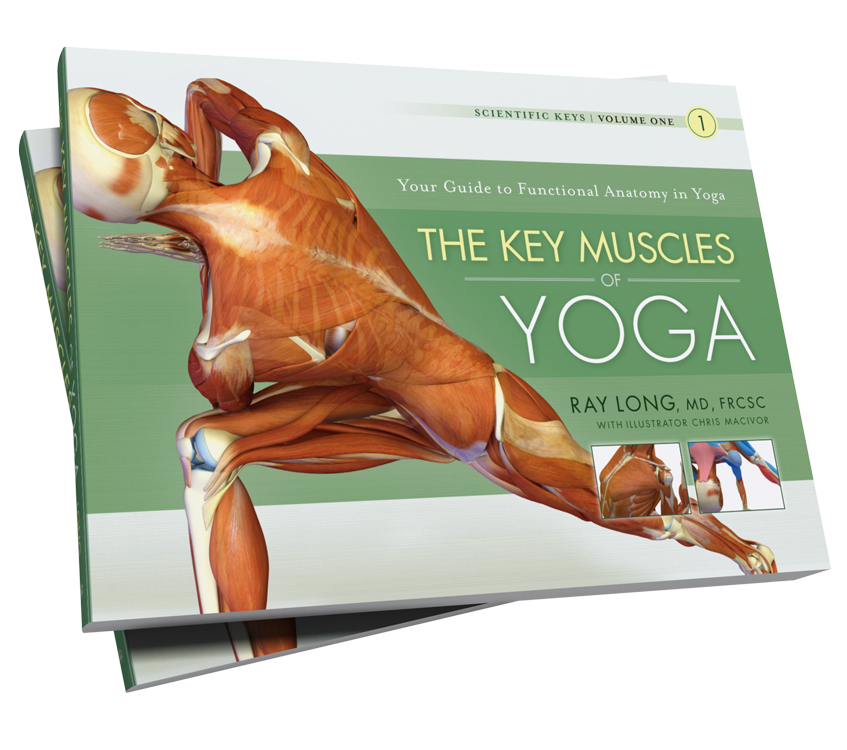
Thankfully, this book is now available for those of us who need more than words to learn. "The Key Muscles of Hatha Yoga" is a colorfully illustrated book - detailing important muscles and how they relate to hatha yoga. The pictures dramatically represent a human skeleton with specific muscles in different yoga poses - giving the reader a clear view as to how and why the muscles are working. This knowledge is key to developing a safe and effective yoga program.

This is a unique book that is very educational. It is certainly helping me to be more informed. If you want to get an idea of what this book contains, the authors have set up a website that gives a glimpse into the book's content: www.bandhayoga.com. You won't be disappointed with this fine volume.

I can't wait to see what other gems these authors have in mind.


Invaluable, September 25, 2006
Reviewer: Richard Smith (SE Michigan) - See all my reviews

Do not let the price of this book put you off. It is as invaluable to the serious yoga student (and to any yoga teacher) as David Coulter's 'Anatomy of Hatha Yoga' -- and it proves, page after page after page, the wisdom of the saying "A picture is worth 1,000 words."

Except, in the case of this book, the pictures are the most amazing drawings of the skeleton and the relevant muscle groups.

For those who want (or need) to know how specific yoga postures affect specific joints, ligaments and muscles, this book is a godsend.

It obvious that Dr. Long, the book's author, is not only highly skilled in anatomy, but he has a rare appreciation for yoga and how to work with each muscle group in the body. More importantly, he can (with the aid of Chris McIvor's unique and fascinating drawings) communicate his knowledge clearly and memorably.

If stranded on a desert island with only two or three yoga books, I would want this book to be one of them. It is that good, that instructive.


A must-have for every Yoga instructor in order to teach Yoga safely, November 11, 2006
Reviewer: Vanita Lakhwala (Union, NJ) - See all my reviews

I was looking for just such a book, because I felt that unless we (instructors) have a very good idea about all the anatomical parts that get affected by various yoga asanas, we would not be providing mindful instruction. The book provides fantastic illustrations that explain themselves without the need for too many words. I feel that viewing the bare bones structure of the body in this manner makes me visualize the movement of a particular asana much better than if I were given a verbose description of it. So once again, much thanks to Dr. Long and Chris Macivor for an excellent work of art and science.


Creating A New Awareness, August 17, 2006
Reviewer: Yoga With Betty Friends "YWBF" (Baltimore, Maryland United States) - See all my reviews

A couple of years ago I injured my Rotator Cuff Muscles and while going through physical rehabilitation of my shoulder, I wanted to continue a safe Yoga practice rountine. I purchased a copy of Dr.Ray Long's book "Scientific Keys Volume I - The Key Muscles of Hatha Yoga" and happily it was just the informtion that I needed to safely guide my practice. The book is clearly written, easy to understand with factual information about the key muscles of the body. The book breaks the body down into three parts (The Pelvic Girdle and Thighs, The Trunk and The shoulder Girdle, and The Upper Arms). Each part is then broken down into 'bite size' pieces of information related to the topical part. The sections are made more interesting by the wonderful illustrations of Chris Macivor. Each part of the body being discussed is illustrated and highligted. It is than made more understandable by illustrating Yoga poses that correlate to that body part. A wonderful book for those of us that have no medical training but need to know more about the muscles of the body and would like to have a book that invites us to read it because it is fun and attractive as well as a wonderful reference book.


Anatomic Yoga TM